Image
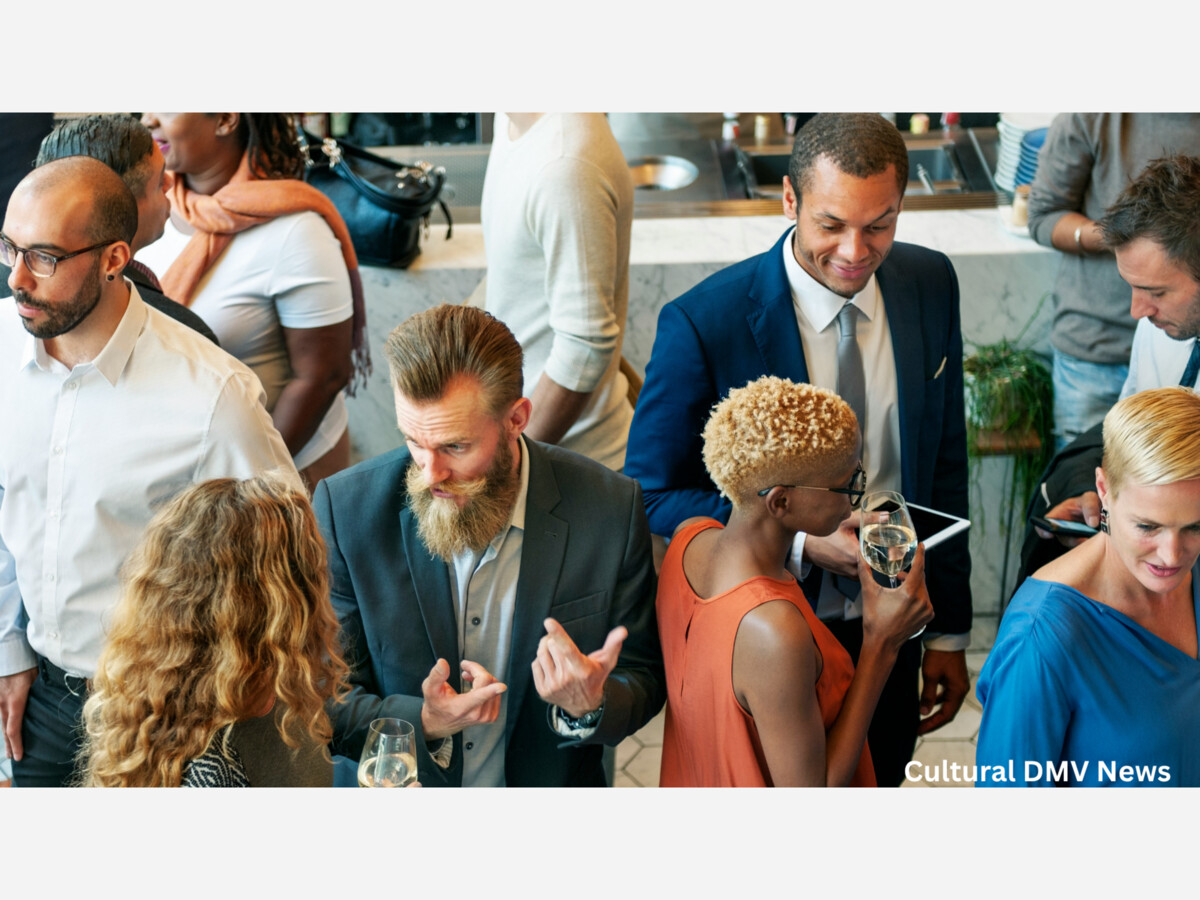
Top business leaders in the DMV (DC, Maryland, Virginia) as of 2025–2026 include influential executives in tech, government contracting, and finance.



The region is shifting. Federal downsizing. AI anxiety. Housing costs squeezing talent from both ends. Everyone agrees we need networking more than ever. But what kind? And can one kind do it all?
As of April 2026, three corporate-style leaders are reimagining their top resources to better respond to these changes. Their roles are pivoting from traditional small business networking to active resilience-building. But they're not the whole story. Alongside them, community-based networkers are doing different work—less visible, more embedded—that reaches business owners who might never attend a chamber summit.
The region needs both. The question isn't which network is better. It's how they connect.
Chinyere Hubbard – President & CEO, DC Chamber of Commerce
Hubbard is spearheading the District's transition into a future-ready economy. Under her leadership, the Chamber has moved beyond simple business advocacy to hosting major events like the 2026 Small Business Summit & Showcase, focusing on collaborative regional growth across DC, Maryland, and Virginia. Her work now emphasizes economic stabilization—bridging the talent gap and integrating AI into small business operations to combat local labor shortages.
Karen Sippel – Managing Director, Maryland Women's Business Center (MWBC)
Sippel oversees a center recently named a 2026 National WBC of Excellence. She is a primary architect of the region's support system for crisis-driven entrepreneurship. Her "Founders Rising" program specifically targets displaced federal workers, turning career endings into powerful new beginnings through structured eight-week business launches.
Kathy Hollinger – CEO, Greater Washington Partnership (GWP)
Hollinger unites the region's largest employers—including giants like Amazon and Capital One—to solve systemic economic issues. Her work has evolved from regional connector to infrastructure strategist. She is currently leading the charge to create a future-ready workforce, focusing on ensuring the DMV remains competitive as it moves away from its heavy reliance on direct federal employment.
These three are rebuilding the region's formal infrastructure for resilience. Summits. Policy papers. Workforce frameworks. Necessary work.
But some business owners need different entry points. That is where community-based networks enter the picture.
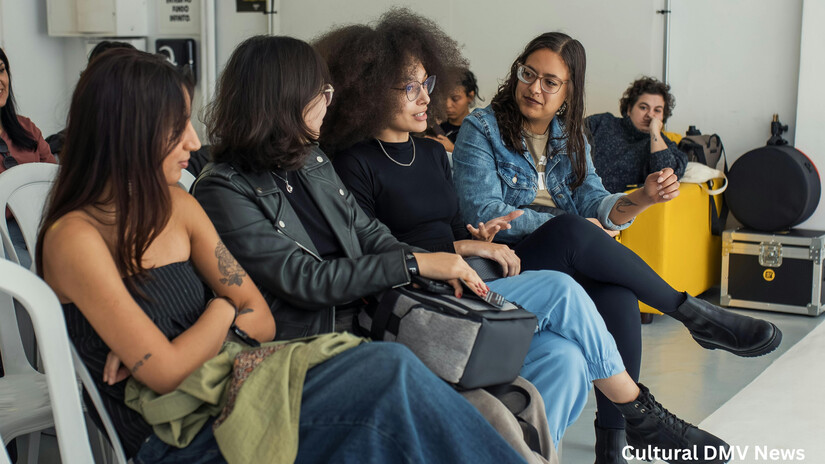 Job cuts in white-collar in the D.C is fueling an uptick of prospective small business owners attending community-based organizations' business development seminars.
Julia Westfall and Monti Taylor – Hera Hub DC (Friendship Heights)
Julia Westfall founded Hera Hub DC in 2015, creating a female-focused coworking space and business accelerator. She spent twenty-plus years helping entrepreneurs with financial and HR needs before recently transitioning leadership. When she announced her retirement, she didn't hand the keys to a corporate hire. She handed them to Monti Taylor—a member who started at Hera Hub running her operations consulting business.
Monti stepped up because she believed in the community. That is the model.
Hera Hub describes its approach as "zero pitch-fest energy—just authentic connections" and "community and collaboration over competition." The space has 450-plus members across seven locations nationwide. Monthly open happy hours cost ten dollars for non-members and include a drink—a low barrier to entry designed for business owners who are still watching their budgets.
Hera Hub also partners with the NCRC Community Development Fund to provide technical assistance for women- and minority-owned businesses. That is a concrete example of how community-based networks connect to formal funding structures.
Felena Hanson – Founder, Hera Hub Global (San Diego)
Hanson founded the Hera Hub model in 2011 after running a marketing agency from her home for eight years. She lived the isolation she is now solving. She wrote Flight Club, a book about launching a dream business. She set a goal of supporting 20,000 female entrepreneurs and has already helped over 13,000. While she is based in San Diego, her model has shaped the DMV's Hera Hub—and her advisory work with SBDC networks shows how community-based leadership can also inform policy.
Is this a likely scenario of what may actually be happening right now?
Let's assume Tanya has recently been let go from a federal contractor where she worked for twelve years. She always dreamed of owning her own business—a small event planning company focused on corporate retreats. But now, she doesn't have a choice. She has four months of savings before the need to earn begins.
Where does she go first?
She finds Karen Sippel's Maryland Women's Business Center. The MWBC's "Founders Rising" program built for someone exactly like her—a displaced worker who needs to turn a career ending into a business launch in eight weeks. She gets a coach. She gets a cohort. She gets a roadmap.
But what else does she need?
She needs a place to work that is not her kitchen table. She needs to meet other women who are doing what she is trying to do. She needs to practice her pitch in front of humans who will tell her the truth, not just "good luck."
She finds Hera Hub DC. The ten-dollar open happy hour is within reach. She meets Monti Taylor, who started her own operations consulting business from that same space. Monti does not sell her anything. She just says, "I did it. You can too."
Now watch what happens next.
At Hera Hub, Tanya mentions she is struggling to understand how to price her retreat packages for corporate clients. It turns out the DC Chamber just ran a workshop on AI tools for pricing strategy. And the recording is free.
Tanya watches the recording. She adjusts her pricing. She feels less alone.
 Women entrepreneurs in Maryland and DC are accessing specialized resources to foster growth and sustainability
Six months later, Tanya has landed two corporate clients. She is still a member at Hera Hub. She has referred three other displaced workers to MWBC's Founders Rising program. She has never met Kathy Hollinger or Chinyere Hubbard personally. But the programs they built reached her anyway.
This article is a sketch, not a full portrait. We want to build a fuller picture of the DMV's networking ecosystem—formal and informal, corporate and community-based.
If you are leading a network—any network—and you have a perspective we missed, reach out. We would love to hear your story.
Tanya's story is hopeful. But it's also incomplete.
According to the U.S. Bureau of Labor Statistics, approximately 20% of new businesses fail within the first year, and about 50% fail within five years. For first-time entrepreneurs specifically, research from the Kauffman Foundation shows that 68% struggle with strategic positioning decisions in their first six to twelve months—decisions like where to locate, how to price, which customer segments to prioritize, and when to expand.
These aren't failures of effort or passion. They're information gaps.
The networks profiled above—MWBC, Hera Hub, the DC Chamber—provide crucial peer support, community, and foundational business knowledge. That work is essential. But there is a layer even the best networks struggle to cover: hyperlocal market intelligence that answers the specific, high-stakes questions entrepreneurs face after the initial launch.
Questions like:
These are questions usually answered by an expensive business consultant. Or, if you are lucky, a mentor who has built the exact same business you are trying to build.
But not every entrepreneur has a consultant on retainer. And not every mentor's twenty-year-old story applies to today's market dynamics.
So, the question becomes: is there an affordable, accessible way for entrepreneurs like Tanya to make strategic positioning decisions based on current data — not just anecdotes?
We think so. Noma knows. Learn about Noma as an affordable intelligence guide →
#DMVNetworking #CorporatePivot #CommunityAnchors #HeraHubDC #ChinyereHubbard #KarenSippel #KathyHollinger #CulturalDMV

Sunny, with a high of 71 and low of 54 degrees. Sunny for the morning, clear during the afternoon and evening,