

Image
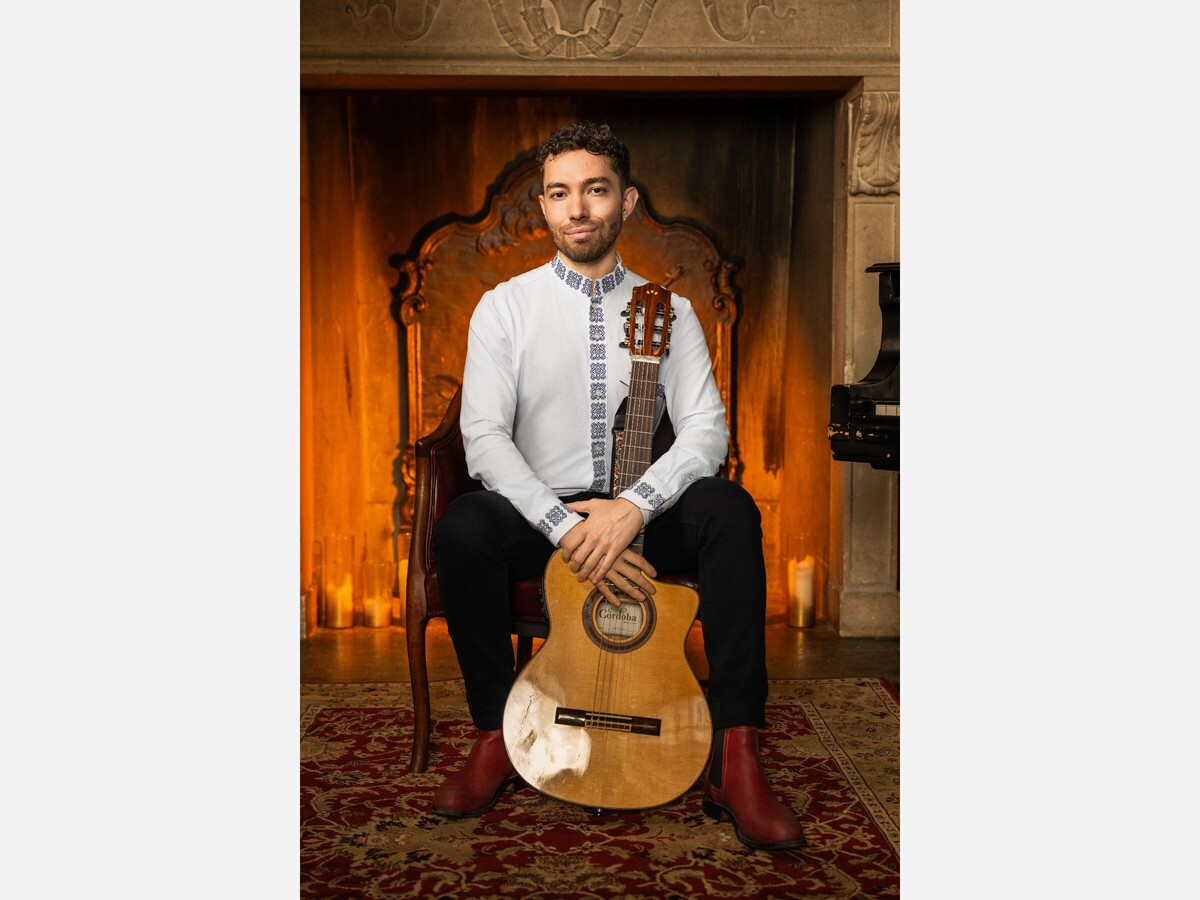
Classical violin meets mariachi heritage and queer storytelling in Juan Manú's three-part residency at the Mansion at Strathmore. Manú invites the audience to find their voice — and join him in a collective grito.
There are times Juan Manú feels the need to translate or explain a song. Sometimes that helps.
But the need has also pushed him somewhere more interesting: beyond language.
"I think a lot about vocal tone and phrasing," he says. "Musical choices such as the key of the song or chord progressions to carry the emotional arc of a song. In doing this, I manage to tell the audience what the song is about in ways that are far more effective and powerful than just the lyrics themselves."
Listen to him for thirty seconds and you hear it. He is not just preserving tradition. He is pulling it forward.
You may have already heard him on WOWD 94.3 FM Takoma Radio. And if you have been paying attention, you already know: this is someone worth showing up for.
Juan Manú grew up in El Paso, a border city where he lived in a cultural in-between before he had language for it. His parents were forward-thinking people who exposed him to classical and contemporary music and ensured he had a solid musical foundation. At home: 1970s Mexican ballads from his mom. Classic rock from his dad. His ear developed across both worlds.
Interestingly, mariachi was not central to his early musical life. He was immersed in classical violin through school programs and youth orchestras. It wasn't until he left El Paso for California that homesickness set in. He turned to mariachi for the first time.
That is when everything clicked.
Today, his music is a culmination: classical training, American genres, and a rediscovered connection to his Mexican and borderland roots.
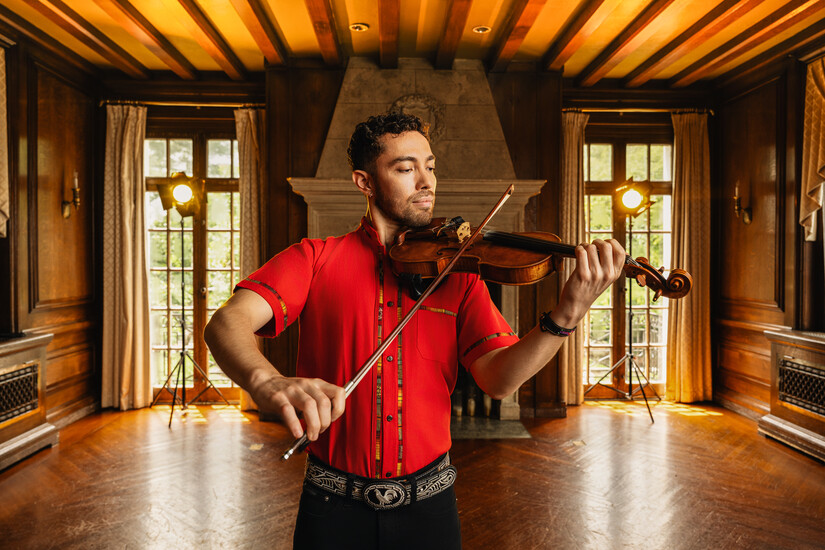
Classical violin gave him technical precision. It allows him to push the boundaries of mariachi through complex arrangements and compositions.
But mariachi taught him something classical music often doesn't: how to listen.
"It's learned by ear, rooted in memory, and relies on deep ensemble awareness rather than a conductor or sheet music."
Holding both worlds together has made him a more versatile and collaborative musician. You can hear it in the way his violin phrases breathe — precise but never stiff, polished but never cold.
His musicality is brave and daring. Confident in his roots. He is not hiding behind virtuosity. He is not apologizing for tradition. He is standing squarely in both.
His skill is polished. But it is not showy. The technique melts into the melodic line. You notice the feeling before you notice the fingers.
Then there is the rhythm. He leans into percussive instruments, syncopation, call-and-response — all indigenous to the western regions of Mexico and the broader Latin American landscape. These are not decorative choices. They reinforce his intentionality. He wants to tell stories in a specific way: communal, embodied, alive.
"You don't just consume mariachi," he says. "You experience it. The audience is part of it: singing along, responding, even shouting a grito as an emotional release."
He is also intentional about something quieter.
"I'm very thoughtful about who I collaborate with, who mentors me, and the spaces I step into," Juan says. "That can feel limiting at times, but it's also how I build community that is genuinely supportive and aligned."
For Juan, showing up fully means bringing his Mexican heritage, his classical training, and his queer identity into the same room. He does not announce it from the stage. He just refuses to leave any of it behind.
Juan Manú is a Strathmore Artist in Residence this year. His three-part residency runs Wednesday evenings in May at the Mansion at Strathmore.
If you chose to see Juan every night of his series, we would understand why. If you could only see one night, make it May 27.
"That night represents rebirth and evolution," Juan says. "It's a full set of original music that pushes the boundaries of Latin sound. A celebration of collaboration, diversity, and where this music is headed."
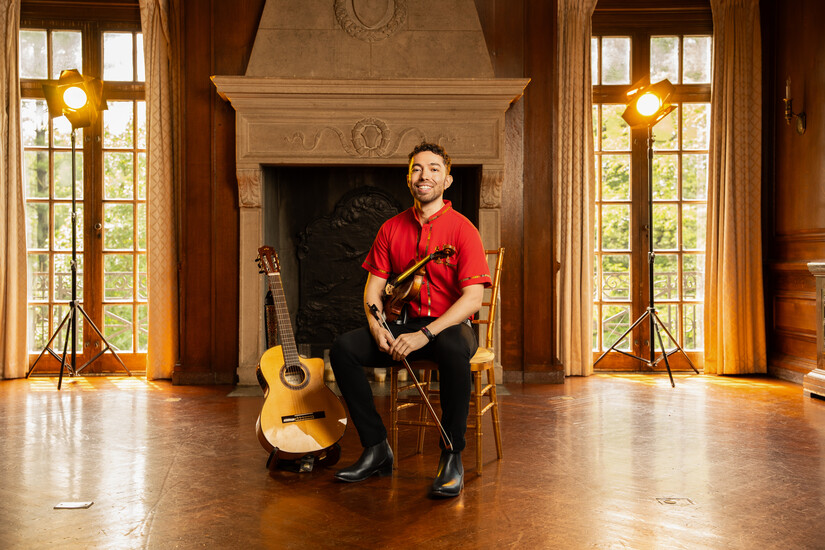
Juan performs mostly in Spanish. Something gets lost in translation. Yes.
But something also gets gained.
He thinks about vocal tone. Phrasing. The key of the song. Chord progressions that carry emotional arcs. By the time he is done, you know what the song is about — even if you do not understand a single word.
That is not translation. That is transcendence.
And that is why Juan Manú is on his way to creating a musical legacy that will endear him to the hearts of music lovers in general, and lovers of Latin and Mexican music in particular.
He is not waiting for permission. He is not waiting for the right label or the right algorithm. He is playing. He is listening. He is inviting you to shout.
Grito included.
Who: Juan Manú, multi-instrumentalist and singer-songwriter
What: Three-part Artist in Residence series at the Mansion at Strathmore
When: Wednesdays, May 13, 20, and 27 at 7:30 p.m.
Where: The Mansion at Strathmore, 5301 Tuckerman Lane, North Bethesda, MD
Tickets for each performance and workshop are available on the Strathmore website.
Juan Manú builds culture. Border stories. Backyard sound. One week until the mansion at Strathmore. Be there to experience it. Bring a friend.
#StrathmoreAIR #LatinxMusic #QueerArtist #DCArts #MariachiViolin #LiveMusicDC #JuanManu


Sunny, with a high of 69 and low of 47 degrees. Sunny during the morning, clear during the afternoon and evening,