62° and Clear
Image

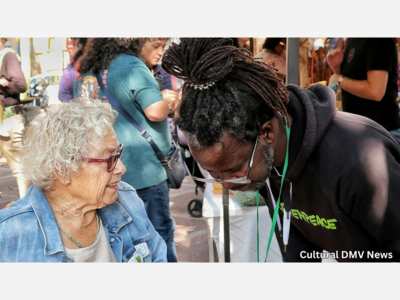
A small group of Takoma Park residents seated together, engaged in the kind of conversation that built a movement. This is how neighbors defeated a highway and chose the Metro.



If you use the Takoma Metro Station for your morning commute, you are standing on a site defined by one of the most significant preservation battles in local history.
Before it was a Metro stop, it was a neighborhood under threat.
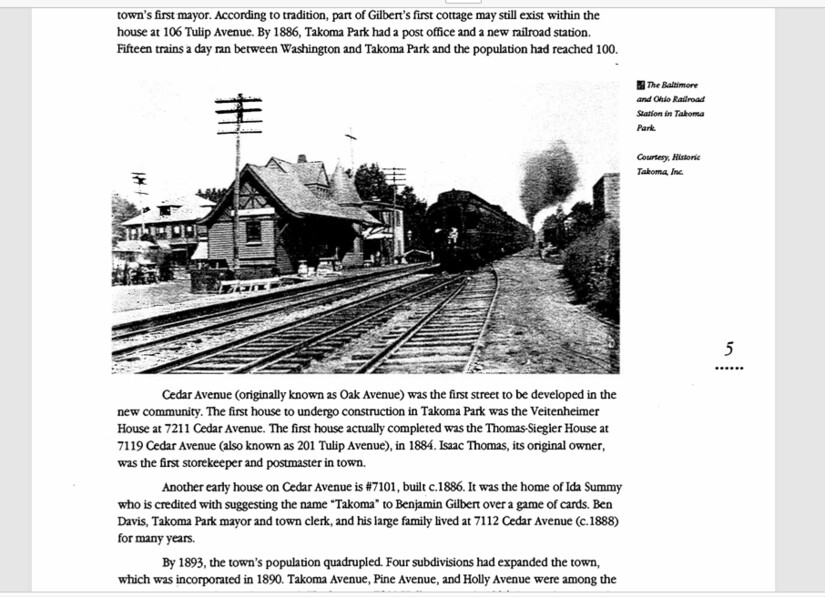 Cedar Avenue (originally known as Oak Avenue) was the first street to be developed in Takoma Park. (Courtesy, Historic Takoma Park)
When Takoma Park was platted in 1883, Cedar Avenue was the town's premier runway for Gilded Age architectural ambition. The homes that went up were not modest. They were grand, intricate, and deeply influenced by a global movement that had captured the Western imagination: the exotic, sophisticated aesthetics of Moorish Spain. While elite merchants in Kropyvnytskyi, Ukraine, were building palaces influenced by the same trend, builders in Takoma Park were capturing that exact same worldly aesthetic. Subtle echoes of that shared global movement still exist in the neighborhood's historic homes today.
That global obsession was rooted in the grandeur of Al-Andalus—the Islamic empire that once ruled the Iberian Peninsula. Centuries after its peak, the Western world fell in love all over again with Andalusian aesthetics: horseshoe arches, intricate tilework, and geometric filigree. They became the ultimate symbols of sophistication. That 19th-century desire to connect with distant cultures did not stop with Victorian builders. It directly mirrors the same worldly interest that keeps modern Takoma Park residents exploring global histories, keeping the spirit of that architectural era alive today.
By the late 1960s, a massive threat loomed over these historic structures. The federal government proposed building the North Central Freeway—a giant multi-lane highway intended to bring Interstate 95 straight into downtown Washington, D.C.
Had the highway planners gotten their way, the map of Takoma Park would be unrecognizable today. The 1963 design did not stay neatly tucked against the industrial railroad tracks. To smooth out a curve for the six-lane interstate, planners mapped a route that veered a half-mile away from the rails, carving a massive concrete trench right through the heart of the community. That 1.1-mile curve alone would have wiped out 471 local homes, flattening whole blocks of historic Victorians into asphalt.
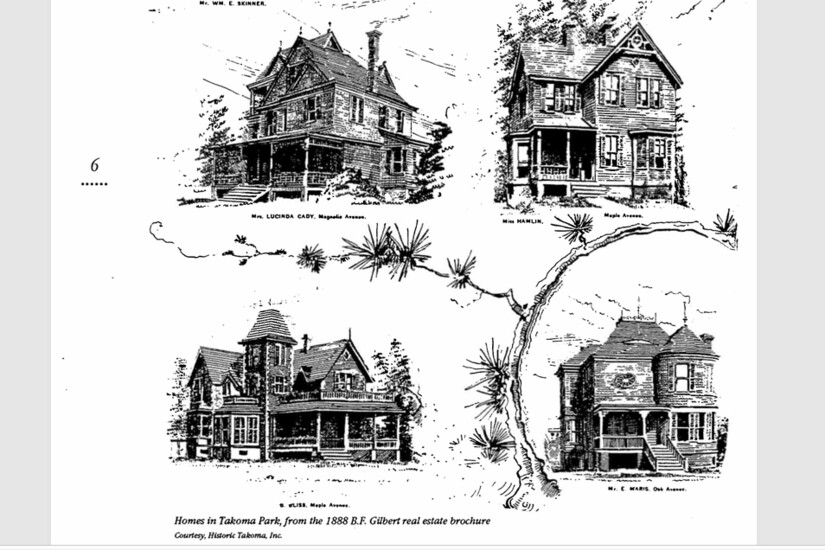 Homes on Takoma Park from the 1888 Gilbert Real Estate Brochure (Courtesy, Historic Takoma Park)
Instead of accepting the destruction, Takoma Park residents, led by future mayor Sam Abbott, fiercely resisted. The community organized, lobbied, and refused to let their neighborhood become a highway corridor. Their strategy was clear: leverage the existing B&O railroad corridor for public transit to save the bulk of the neighborhood.
Because neighbors successfully revolted, the entire freeway project was officially killed in 1977, forcing Interstate 95 to truncate at the Capital Beltway in College Park and loop around the city instead.
But preservation is never free. The hard-fought community victory required precise trade-offs at the station's footprint. A small handful of early properties on the edge of the tracks had to be cleared to make way for the modern platforms.
Among them was 208 Cedar Avenue, a grand Victorian home once noted in early archival records for its intricate gingerbread trim and fish-scale shingles. By the 1970s, many homes directly adjacent to the loud, soot-heavy train tracks had fallen into decline, making the transition to a clean, modern transit hub a forward-thinking choice for a progressive community.
The success of that balanced choice is still visible today. While 208 Cedar was sacrificed to give us the Metro station, just a short walk up the street stands 7105 Cedar Avenue.
Built around 1907, this striking brick Second Empire survivor—complete with its steep French Mansard roof and elegant arched windows—stands tall precisely because the freeway was defeated. It remains a stunning reminder of the neighborhood's original Gilded Age ambition, preserved alongside the very transit system that saved it.
It proves that our community's passion for the wider world, and determination to protect the treasures it inspires, is just as strong now as it was over a century ago.
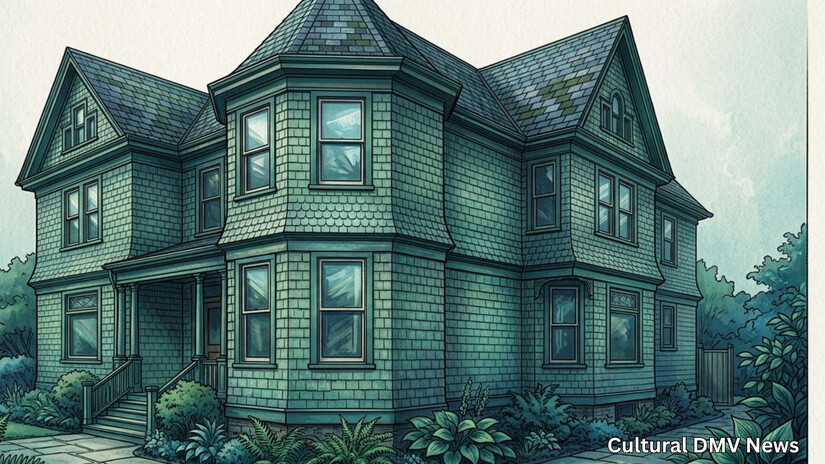 A home on present-day Cedar Avenue noted for its original woodwork, arched windows, and high ceilings. (Inspired by a Google Maps Street View image).
#TradeOffsOfProgress #TakomaPark #MetroHistory #Preservation #BeforeItWasGone


Sunny, with a high of 73 and low of 50 degrees. Sunny in the morning, clear for the afternoon and evening,