62° and Overcast
Image
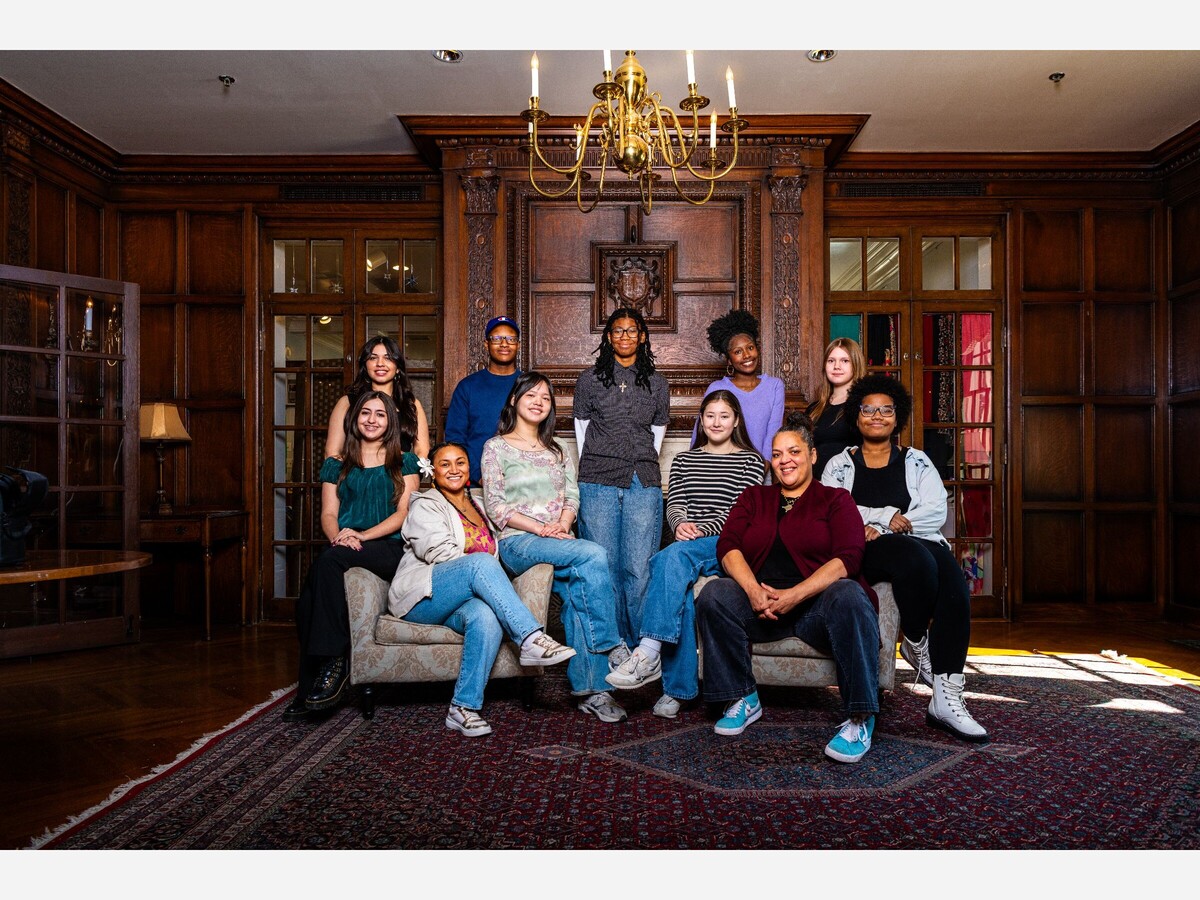
Photo by Carlos Gonzalez-Fernandez - Permission granted by Strathmore.



"All that you touch, You Change. All that you Change, Changes you. The only lasting truth Is Change."
Lauren Olamina wrote those words in a notebook. She was fifteen years old. The world outside her gated community was burning—literally. Climate collapse. Economic crisis. The slow unraveling of everything her parents believed was permanent.
She called her philosophy Earthseed. The core belief? God is not a bearded man on a throne. God is Change. Unstoppable. Shapeable. Terrifying. Liberating.
Octavia Butler published Parable of the Sower in 1993. She set it in the 2020s. She imagined an America where housing was unaffordable, where the gap between rich and poor was a canyon, where people lived behind walls and pretended the chaos outside was someone else's problem.
Butler was not a prophet. She was a historian of the present, disguised as a science fiction writer. And she left behind a question that Strathmore has turned into a program: What do young people do with change when they cannot stop it?
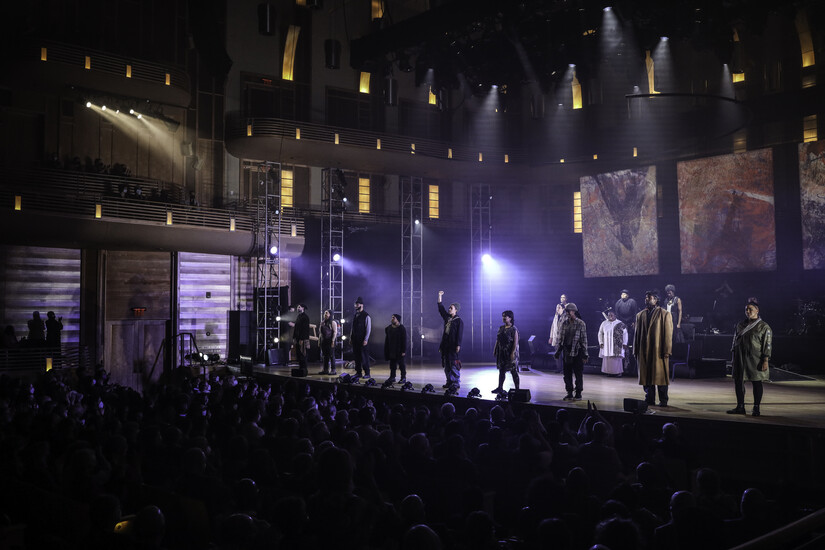 Photo by Joi Brown. Strathmore's 2022 production of The Parable Sower. Permission granted by Strathmore.
 In 2022, Strathmore and Woolly Mammoth Theatre Company co-presented a stage adaptation of Parable of the Sower, created by Toshi Reagon and Bernice Johnson Reagon. The show was not a typical musical. It was a communal experience—gospel, blues, rock, and Butler's words woven together like a sermon for the end of the world.
Audiences left changed. But the production wanted something more lasting than a post-show discussion.
So they created the Arts and Social Justice Fellowship (ASJF).
The idea was simple. Find high school students who are already asking Butler's questions. Give them resources. Connect them with mentors. Turn them loose on a collaborative project that imagines a better world—not despite the chaos, but within it.
The fellowship is now in its fifth year. Nine students are selected annually. They meet regularly for workshops, site visits, and performances. They learn from artists, activists, and each other. And at the end, they create a public installation that reflects their collective vision.
This year's fellows have been exploring themes of identity, home, safety, and connection. Their work, titled "Sanctuary of Solace," is a multi-media art installation responding to the loneliness epidemic, the lack of third spaces, and the disconnection caused by technology.
Meet the 2026 fellows:
Natalie Chen, Madeline Cortez, Arianna Fulcher, Noah Morris, Sofia Otero-Diaz, Rihanna Pabai, Ana Redman, Sofiia Remizova, and Reon Williams.
Read their full bios and see their photos on Strathmore's website.
Before the installation viewing, the fellows will host a panel discussion on their collective artistic process and share calls to action with the audience.
Butler wrote that "the weak can overcome the strong if the weak persist." The ASJF fellows are not waiting for permission. They are shaping change—together.
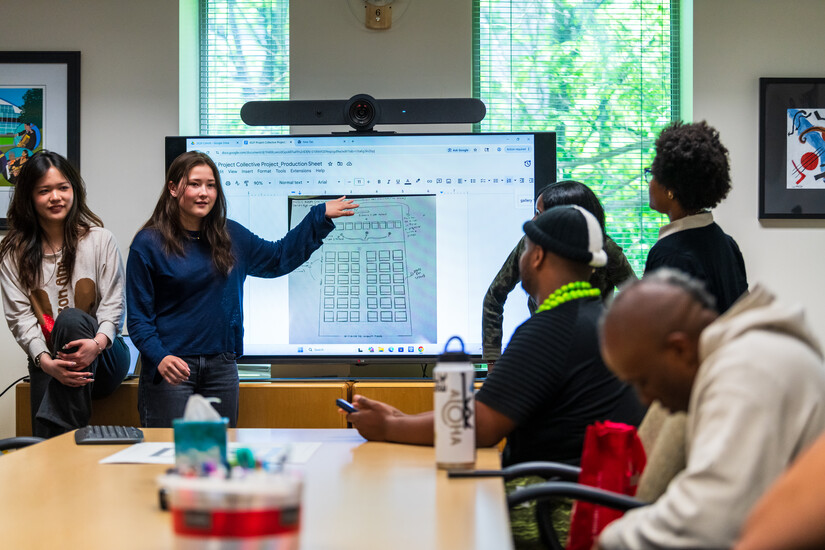 Planning meeting. Photo by Carlos Gonzalez-Fernandez - Permission granted by Strathmore.
Lauren Olamina wrote that "Earthseed deals with ongoing reality, not with supernatural authority figures. Worship is no good without action."
The ASJF fellowship is action. It is the opposite of doomscrolling. It is the opposite of waiting for someone else to save us.
Butler once explained her philosophy in an interview:
"I asked what was the most powerful force I could think of? What one thing could we not stop no matter how hard we tried? The answer I came up with after some thought was 'change.' We can do a lot of things to influence the ongoing processes of change. We can focus them, alter their speed or impact—in general, we can shape change—but we can't stop it no matter how hard we try."
That is the core of the fellowship. Not preventing change. Shaping it.
Parable of the Sower ends with Lauren leaving California. She is leading a small group of survivors north. She has no money, no weapons, no guarantee of safety. What she has is a philosophy and a handful of followers.
Butler never finished the sequel. She left us with the question: What happens next?
The ASJF fellows are answering it. One installation at a time.
"We are a harvest of survivors."
— Octavia E. Butler, Parable of the Sower
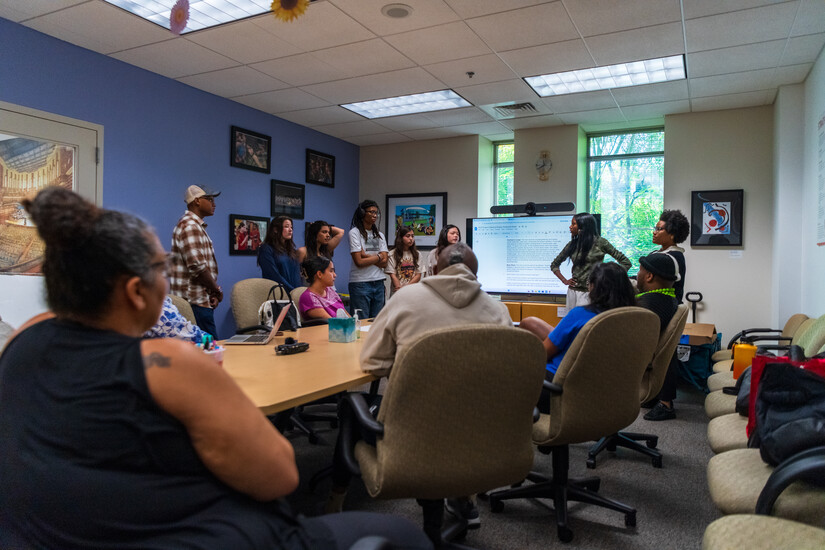 Exhibition planning session. Photo by Carlos Gonzalez-Fernandez - Permission granted by Strathmore.
#SanctuaryOfSolace #ArtsAndSocialJusticeFellowship #OctaviaButler #Strathmore #WoollyMammoth #TeenArtists #CulturalDMV
51 years. Countless birthday parties. One pizzeria off Rockville Pike closing June 20.
"The success of Armand's was never just about the food," the owners said. "It was about the people of our community." Read the story Monday morning.
Link here to follow the story.



Sunny, with a high of 62 and low of 47 degrees. Overcast in the morning, clear for the afternoon and evening, light drizzle overnight.