51° and Light rain
Image
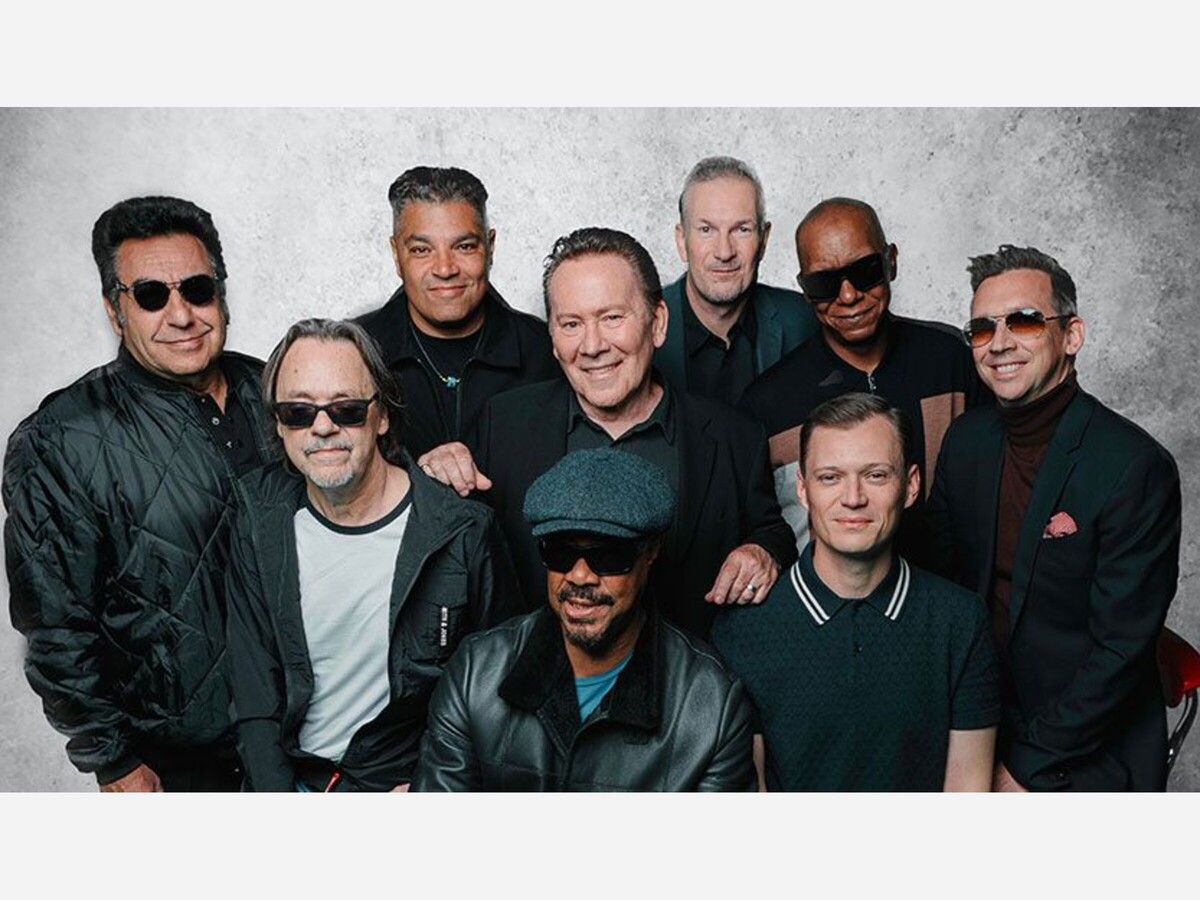
UB40, pictured ahead of their September 30 show at The Music Center at Strathmore. Drummer Jimmy Brown is second from the left in the frame. Photo courtesy of Strathmore.



Published September 26, 2026 · 6 min read
In 1957, in a maternity ward in Birmingham, England, two babies were born within months of each other. One was white. One was Black. Neither family had any reason to know the other existed.
Those babies grew up to be Jimmy Brown and Earl Falconer, the drummer and bassist of UB40.
Jimmy Brown spoke with Afrobeat Orbit on WOWD ahead of UB40's September 30 show at Strathmore.
The story begins in a maternity ward that could have been a photograph of the era's contradiction. Birmingham in the late 1950s was a city being remade by migration. The first Caribbean families had arrived as part of the Windrush generation, recruited to work in the foundries and factories of the West Midlands. By the early 1960s, thousands of West Indian and South Asian families had settled in the inner-city neighborhoods of Small Heath, Sparkbrook, Handsworth, and Balsall Heath—the same streets where white working-class families like Jimmy Brown's had lived for generations.
The welcome was not warm. In 1964, the nearby constituency of Smethwick became a national symbol of racial politics when Conservative candidate Peter Griffiths won on an anti-immigrant campaign. Four years later, Enoch Powell delivered his "Rivers of Blood" speech in Birmingham, predicting racial violence and calling for an end to immigration. Politicians were not merely reflecting tensions; they were manufacturing and exploiting them.
And yet, in the middle of that, a white baby and a Black baby were born in the same ward. At eleven, they were at the same arts school. By their late teens, they were in the same band.
Jimmy describes himself as coming from "the so-called white trash, 100% blue collar people in Birmingham," going back as far as his family knows. His closest friends were Black and brown. His own family said racist things about them. He decided early not to accept it.
Reggae didn't arrive in Birmingham as a market opportunity. It arrived as storytellers from an island meeting the storytellers already there.
Jimmy grew up in Small Heath, a stone's throw from Birmingham City's St Andrew's ground. His father worked at BSA Motorcycles, the factory that made firearms, bicycles, and motorcycles. His neighbors were Caribbean, South Asian, Irish, and white English. His school was "a wonderful mix," he has said—"a very privileged upbringing."
The band that emerged from those streets was, quite literally, the neighborhood. The original lineup was a mix of English, Welsh, Scottish, Irish, Jamaican, and Yemeni heritage, with a Nigerian-born founding member, Tope Babayemi, who left the group in 1979. The Yemeni thread runs through percussionist Norman Hassan, who is of Yemeni and Welsh descent. Astro, the vocalist who anchored the band's toasting style for decades, had Jamaican roots. The Campbell brothers trace Scottish lineage through their father, the folk singer Ian Campbell.
That multicultural reality was not the result of a policy or a program. It was the result of people living on the same streets, sharing the same poverty, and refusing, at least in Jimmy's case, to accept the racial hierarchy his own family tried to teach him.
They practiced for a year before playing out—learning instruments, choosing who played what. Thirty shows in, they played a punk venue Jimmy describes as "a toilet." Picture it: a low ceiling, sweat on the walls, a stage barely wide enough for six people and their amps. The kind of room where the bass rattles your sternum before you can hear the melody.
Chrissie Hynde came to that show. She had a number one album and a sold-out tour at the time. By the spring of 1980, she had invited them to tour with the Pretenders, and their debut single had sailed into the UK Top 5. By the end of that tour, they had a bona fide hit.
That's the first time luck found them. It was one person walking into one room on one night.
UB40 is the unemployment benefit form. The band named themselves after the thing that defined their neighborhood.
"One in Ten" is about the conditions of the "lifers" in blue-collar Birmingham—the people with no way out. Jimmy wrote it. He spent time with that reality. It upset him deeply.
Name. Song. Politics. All three come from the same place. He didn't write "One in Ten" as an outsider observing poverty. He wrote it as someone who lived it, about people he knew.
His own read on what music can do is characteristically unsentimental: "It can spread messages, definitely… but fundamentally change the world? Rarely."
Here's the thing about reggae drumming that most people never notice: it isn't about hitting harder or faster. It's about the one-drop—the bass drum and the snare landing together on the third beat, with the hi-hat ticking away on the offbeats. It's a pattern that sounds simple and is nearly impossible to play well, because it only works if the drummer refuses to show off.
Sly Dunbar and Carlton Barrett were Jimmy's primary influences. He became friends with Sly. The lesson: play steady and straight, little or no frills.
Jimmy says he plays better now than he did at twenty.
"Steady and straight, little or no frills" is not just a drumming instruction. It is the band's entire operating philosophy. No trend-chasing. No reinvention. No departure from who they were.
Neil Diamond wrote and recorded "Red Red Wine" in 1967. It peaked at No. 62. Tony Tribe cut a reggae version in 1969. It reached No. 46 in the UK. UB40 heard Tribe's version and thought it was his song. They recorded it for Labour of Love in 1983. It stalled at No. 34 on the Billboard Hot 100 in 1984.
Then a program director heard them play the extended version at the 1988 Nelson Mandela tribute concert and added it to his station's playlist. It went to No. 1—four years after release.
Ali Campbell's response: "Nobody was as shocked as we were to find out that Neil Diamond wrote 'Red Red Wine.' To me, it was always a Tony Tribe song."
If this section had come earlier, it would read as the story of the band's luck. Coming here, after the ward and the school and the toilet and Chrissie Hynde, it reads as the fourth time luck found them.
There is one UB40 song that matters more than any other to the band's political identity, and it was written by Robin Campbell. "Sing Our Own Song," from the 1986 album Rat in the Kitchen, was an anti-apartheid anthem—and it was banned in South Africa. The chorus is a declaration: "We will fight for the right to be free / And we will build our own society / And we will sing, we will sing / We will sing our own song."
It features the rallying cry "Amandla Awethu"—"power to the people" in Xhosa and Zulu. It peaked at No. 5 on the UK charts and stayed there for nine weeks.
"Sing Our Own Song" is not a song about charity. It is a song about self-determination—the insistence that a people gets to write its own story rather than having one written for them. And it comes from a band of white and Black working-class kids from Birmingham who had already, in their own lives, refused the version of the story they were handed.
The band has played it in South Africa to crowds of 70,000. Hearing a stadium sing "Amandla Awethu" back at a group of kids from Small Heath is not a small thing. It is the whole point.
Here's the piece that makes the band's multiracial makeup make sense.
From the 1950s through the 1970s, Birmingham's Black communities hosted blues parties—house parties modeled directly on the sound systems of Kingston, Jamaica. A stack of speakers in the front room. A selector on the decks. Records brought over from Jamaica or hand-carried from London. Entry charged at the door, food sold from the kitchen, and the bass turned up loud enough that the neighbors could hear it two streets over whether they wanted to or not.
These were community institutions. They were also, notably, one of the few spaces in British cities where Black and white working-class youth genuinely mixed. The doors weren't formally integrated—nothing in Britain in those decades was—but the music was, and the parties were where the music lived.
Jimmy and his bandmates grew up alongside the people who threw them. The sound coming through those walls wasn't imported culture to them. It was the sound of their neighborhood.
UB40 was accused of appropriating Black music—"stealing" it. This was said at the time and is said now.
The complication: they collaborated with Jamaican artists throughout. They brought reggae to audiences who would never have encountered it otherwise. And they were not outsiders to the culture. They were kids from the same streets, sharing the same music and the same blues parties, at a moment when that was not a small thing to do.
Can a band be both an ambassador and an interloper? UB40 has spent forty-seven years being both.
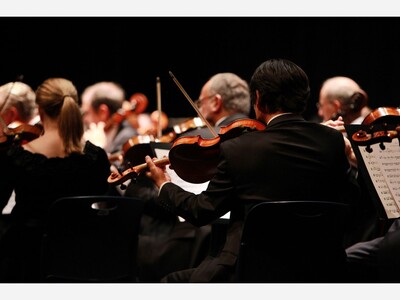
Eleven musicians on one stage. That's the first thing you notice—the size of it. A reggae band this deep means horns on the left, a rhythm section locked in behind, and a low end you feel in your chest before you hear it in your ears.
The bass will do most of the work. Reggae bass is written to be the melody, not the foundation, and in a room with Strathmore's acoustics, it will arrive as a physical presence rather than a sound.
Then there's the audience. UB40 crowds are strange and wonderful things—original fans who bought Labour of Love on vinyl, their grown children who know "Red Red Wine" from weddings, and people who have never once thought of themselves as reggae listeners. By the second chorus, all three groups are singing the same words.
Jimmy, Earl, and Robin have kept this band going for forty-seven years. On September 30, they bring it to a performing arts center in North Bethesda—not a club, not a festival field. A room built for listening.
Eleven musicians on one stage. A horn section. A bass line you'll feel in your sternum. Forty-seven years of a neighborhood sound that never got dressed up for anyone.
UB40 brings The Unstoppable Tour to The Music Center at Strathmore in North Bethesda on September 30—one night, their sixth consecutive year touring North America.
Tickets at strathmore.org.
E, Awa conducted this interview. Afrobeat Orbit airs Wednesdays at 1 PM on WOWD, Takoma Radio.
#UB40 #JimmyBrown #Reggae #Birmingham #Strathmore #TheUnstoppableTour #DMVConcerts #CulturalDMV

Overcast, with a high of 61 and low of 46 degrees. Patchy rain nearby in the morning, overcast in the afternoon, clear in the evening, light rain overnight.