Image
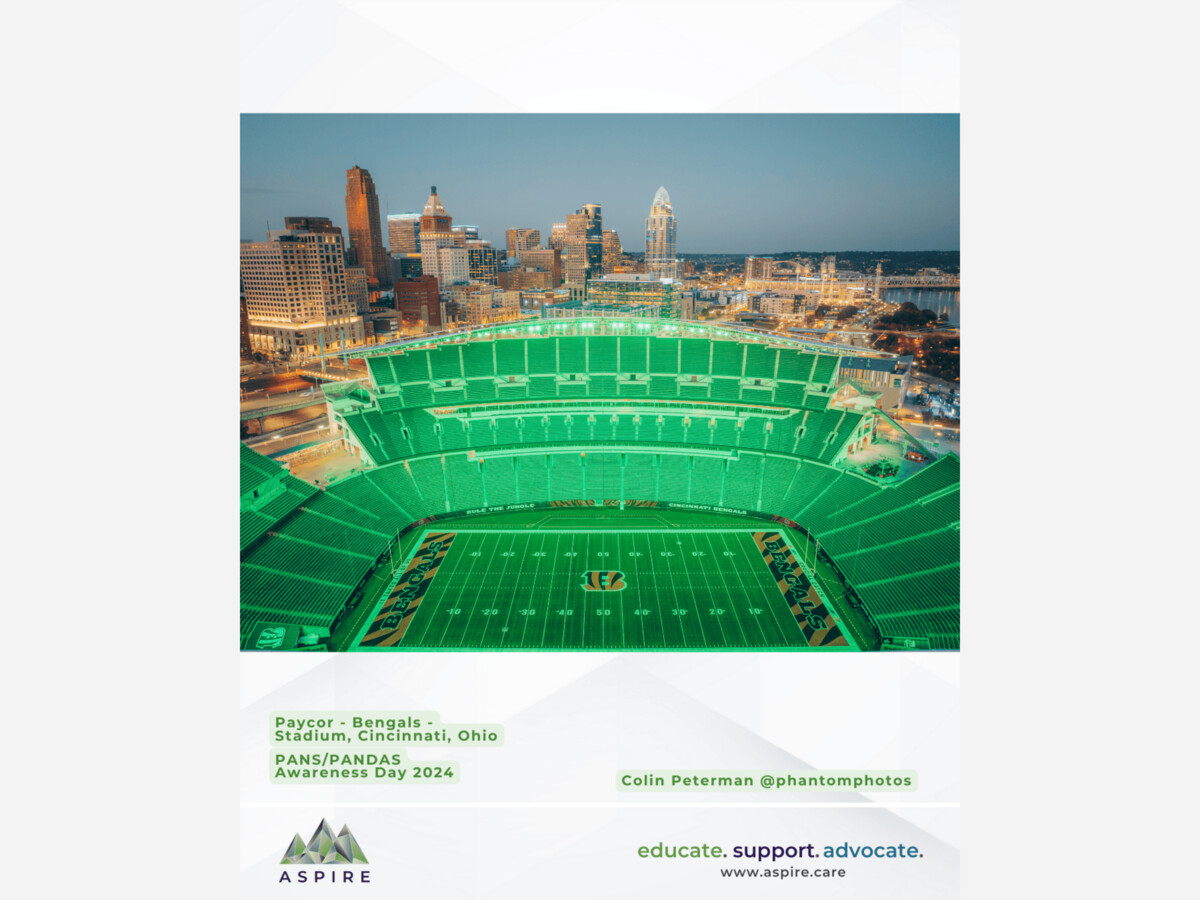
2024. Paycor Stadium lit green for World PANS/PANDAS Awareness Day. Photo by Colin Peterman (@PhantomPhotos), courtesy of ASPIRE.



Published October 6, 2026 · 3 min read
Here's something you should know: on Friday, October 9, more than 300 landmarks around the world will glow green. Niagara Falls. The Rock & Roll Hall of Fame. The Nebraska State Capitol. Philadelphia's Lincoln Financial Field. And four locations right here in Maryland.
They're lighting up for World PANS/PANDAS Awareness Day—a global initiative to spotlight two serious neuroimmune conditions that most people have never heard of, and that thousands of families struggle to get diagnosed.
PANS stands for Pediatric Acute-onset Neuropsychiatric Syndrome. PANDAS stands for Pediatric Autoimmune Neuropsychiatric Disorders Associated with Streptococcal Infections. Both are neuroimmune conditions that can cause sudden onset or worsening of obsessive-compulsive symptoms, severe anxiety, tics, and other neuropsychiatric symptoms.
The key word is sudden. These conditions can appear overnight. A child who was fine last week may be unrecognizable this week—and too often, families spend months or years searching for answers before anyone connects the dots.
This is the third consecutive year of #LightUp4PANS, organized by the Alliance to Solve PANS & Immune-Related Encephalopathies (ASPIRE) alongside 17 international advocacy organizations. The 2025 campaign lit up more than 226 landmarks. This year, that number has already surpassed 300.
"Lighting landmarks green is about more than awareness," said Gabriella True, president of ASPIRE. "It is about making PANS and PANDAS visible so that families are heard, healthcare providers recognize the signs, and patients have a better chance of getting the care they need."
The problem ASPIRE is trying to solve is one of recognition. PANS and PANDAS remain poorly understood by the public and under-recognized by medical providers, which delays diagnosis and treatment. For families, that delay is measured in lost school days, repeated medical visits, and financial strain.
Four Maryland locations are participating in this year's campaign:
If you're driving past any of these on Friday night, you'll see the green. Consider it a signal worth knowing.
Editor's note: M&T Bank Stadium in Baltimore has revised its schedule and will now light green on Friday, Oct. 9, alongside the other Maryland landmarks. The Maryland Stadium Authority confirmed the change on social media. The original listing showed Oct. 8.
Dr. Susan Swedo, a neuroscientist and researcher who first described PANDAS in the 1990s during her time at the National Institute of Mental Health, has spent 25 years studying these conditions. Her message is blunt: "The faster you treat, the faster they can get well."
That treatment starts with addressing the underlying immune abnormality—not just managing symptoms. It's a different approach than most families encounter on their first, second, or fifth doctor's visit.
Wear green on October 9. Light up your home or workplace. Share the #LightUp4PANS campaign. And if you know a family navigating a sudden, unexplained behavioral change in a child, point them toward ASPIRE.
The green lights are a symbol of hope and solidarity—but they're also a nudge. These conditions exist. They're treatable. And the faster families get answers, the faster kids get well.
#LightUp4PANS #PANSPANDAS #WorldPANSPANDASAwarenessDay #ASPIRE #Maryland #DMVHealth #CulturalDMV



Sunny, with a high of 71 and low of 54 degrees. Sunny for the morning, clear during the afternoon and evening,