

Image
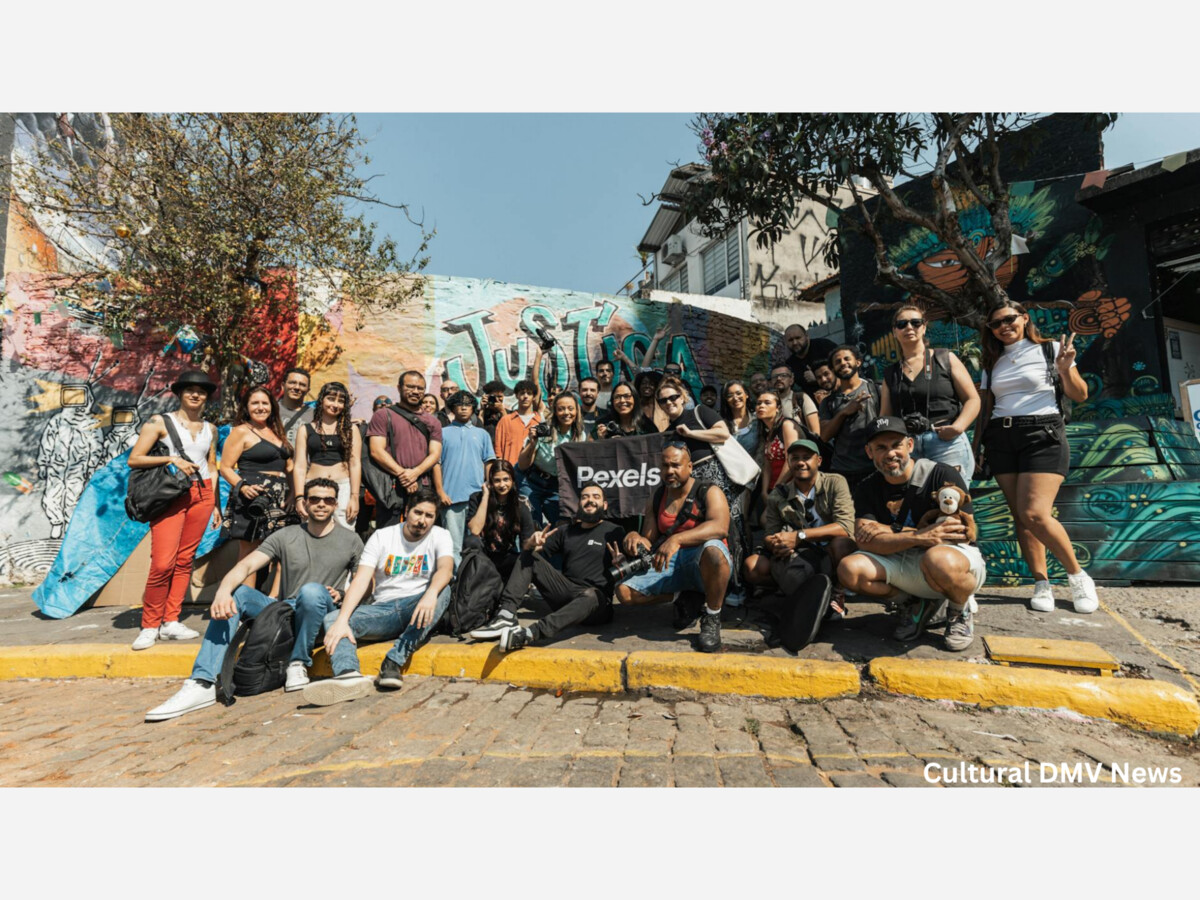
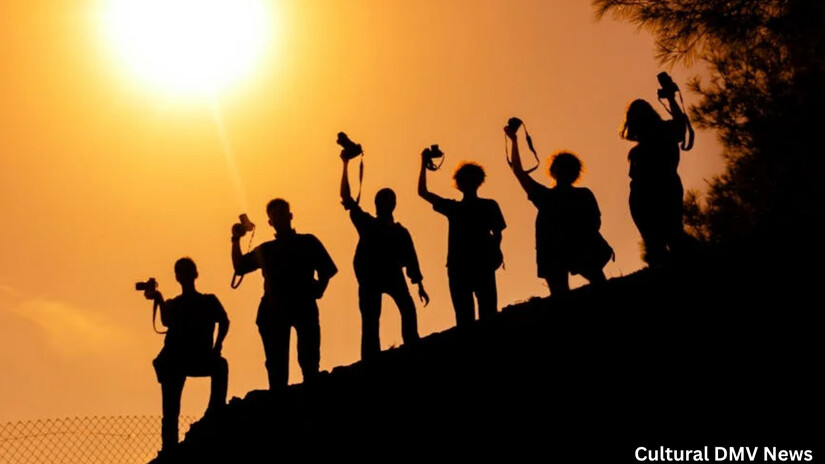
They move slowly. Cameras raised. Some carry vintage film rigs. Others hold the latest mirrorless bodies.
They pause at a fire hydrant. A shadow on a brick wall. A stranger walking a dog.
They barely speak. Yet they are deeply connected.
This is the DMV's analog and digital photo walk revival. And it has nothing to do with Instagram.
In an era of AI-generated images and endless scrolling, a growing DMV subculture is choosing the slow look. It is part exercise, part social club, and entirely about seeing the world one frame at a time.
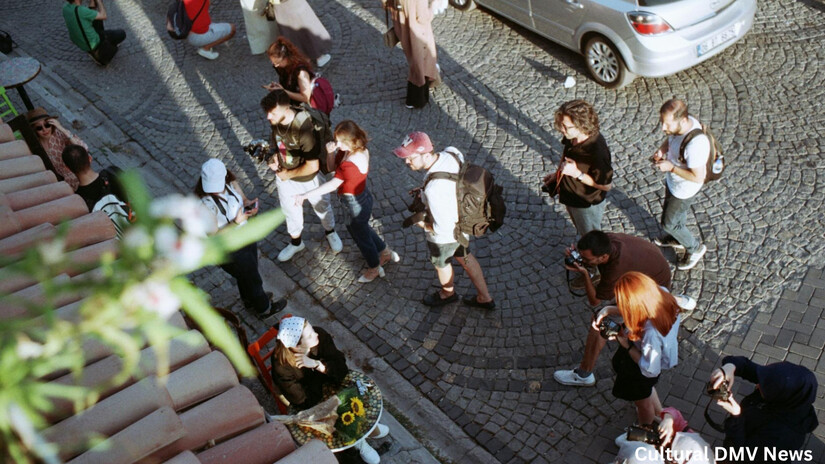
The modern photo walk phenomenon traces back to the early 2000s, when Flickr groups organized local meetups for photographers to shoot together. What started as a novelty grew into something more structured. In the DMV, the scene has shifted from massive, corporate-sponsored events to intimate, niche collectives shaped by local organizations like StreetMeetDC, Exposed DC, and the Leica Store DC.
StreetMeetDC, which celebrated its fourth anniversary in 2019, continues to organize regular walks and even weekend retreats to Shenandoah. Meanwhile, Exposed DC—founded as a platform for emerging photographers—has grown into a nonprofit that has documented life in the District for nearly two decades.
The COVID-19 pandemic accelerated a separate but related trend: the explosion of interest in 35mm film among Gen Z. Young photographers, drawn to the tactile, unpredictable nature of analog, have revitalized interest in film photography. This has, in turn, brought older photographers out of retirement, creating a cross-generational exchange of knowledge that benefits everyone.
One of the most remarkable things about the DMV's photo walk scene is who shows up.
The Veterans arrive with high-end glass and decades of experience. Retired journalists, government workers, and longtime hobbyists who remember when darkrooms were the only option. They know how to read light. They have stories.
The New Guard shows up with vintage film cameras bought on eBay or inherited from a grandparent. Students, creative professionals, and anyone who has discovered that shooting film forces you to slow down. They bring fresh eyes and a willingness to experiment.
What happens when these two groups stand shoulder to shoulder? Something rare in the DMV: a complete leveling of status. A "starving artist" and a "lobbyist" can spend an hour debating the merits of a particular lens or the way light falls on a particular street corner. No one cares about job titles. The only thing that matters is the frame.
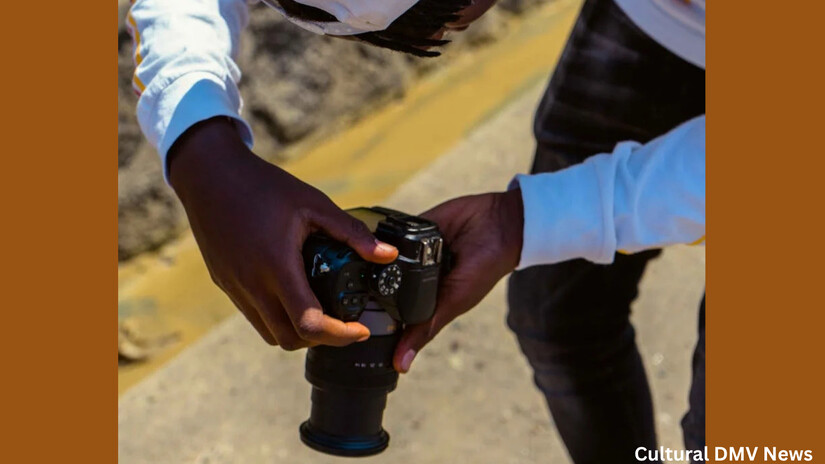
So, what do they photograph?
Architecture and geometry dominate many walks. The brutalist concrete of federal buildings, the historic brick of Alexandria and Frederick, the clean lines of Metro stations. Photographers are drawn to how light carves shapes out of these structures.
Street scenes capture the real DMV—not the monuments, but the street vendors, the commuters, the raw energy of Adams Morgan and H Street. One Exposed DC photographer described documenting "communities of color in all their splendor, hardship, transcendence, and often denied beauty" .
Nature versus the urban is a constant tension. Rock Creek Park cuts through the city. The Anacostia River winds past industrial edges. Photographers chase the intersection where green meets gray.
Nightlife brings a different energy. Long exposures of neon signs, wet pavement reflecting streetlights, the glow of a Metro station at midnight. "Using available light to document nightlife, the streets, the arts, and the urban landscape" is a specialty for photographers like Christopher Chen, whose work has appeared in the Washington Post Magazine and the Washington City Paper .
The act of taking the photo is only half the story.
The darkroom factor has seen a quiet resurgence. Home-processing enthusiasts spend weekends in bathrooms-turned-darkrooms or gather at community labs like Photoworks at Glen Echo Park. Photoworks, which celebrated its 40th anniversary in 2015, offers both darkroom and digital classes, supervised lab hours, and critique sessions like "Coffee & Critique" and "Cocktails & Critique" . The organization began in the 1970s in a basement "with no heat, no air conditioning, frequent floods from summer thunderstorms," but the camaraderie of those early years remains its foundation.
The digital workflow has its own obsessives. "Gear-heads" spend hours on color grading, trying to make digital shots look like film. The debate between analog purists and digital editors is friendly, frequent, and never resolved.
Community critique is built into the calendar. Photoworks runs monthly image conversations where photographers share work, receive feedback, and learn from one another.
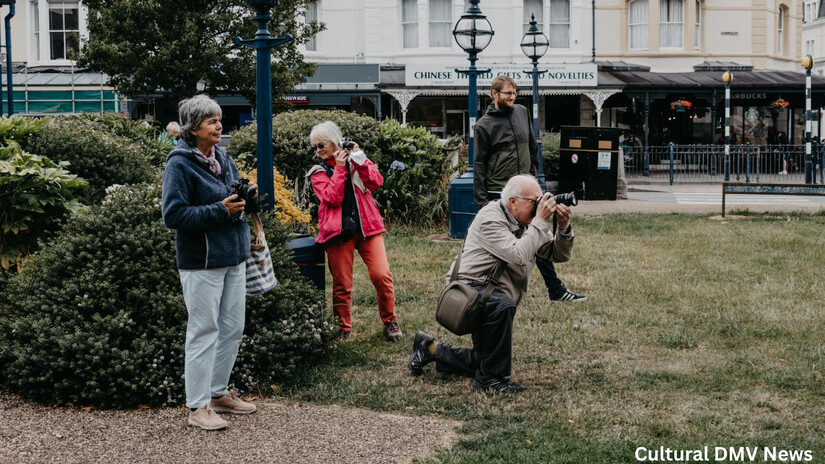
If you have never joined a photo walk, here is what to expect.
Open to all is the rule. Most walks are "come as you are"—from iPhones to $5,000 rigs. No one cares about your gear. The Leica Store DC has even loaned cameras to participants on a first-come, first-served basis.
The duration is usually two to four hours. Walks often end at a local brewery, coffee shop, or diner for what regulars call a "memory card dump" or "film swap"—a chance to review shots, share tips, and decompress.
Frequency varies. Some groups meet monthly or bi-monthly, timing walks with the change of seasons or specific neighborhood festivals.
The photographs do not just sit on hard drives. They circulate.
Digital hubs include Instagram tags like #IGDC and #StreetMeetDC, plus Discord servers where photographers share work and coordinate meetups.
Physical prints have found a new life in "zine" culture. Many groups self-publish small booklets of their walks. The MVT Photo Walk, for example, turned its images into an outdoor exhibit in Prather's Alley and on K Street NW in Mount Vernon Triangle, featuring works by photographers Ashley Tillery, Christopher Chen, Matailong Du, and Shedrick Pelt.
Local exhibits have institutional backing. Most significantly, the Exposed DC Photography Collection—more than 600 images spanning nearly two decades—has found a permanent home at the DC Public Library's People's Archive. The collection will be made available to the public through the library's Dig DC portal, preserving a "vivid tapestry of our city's recent history" for future generations.
If you are curious about joining the DMV's photo walk revival, here are a few entry points:
The only requirement is a camera—any camera—and a willingness to look slowly.
#DMVPhotoWalk #StreetMeetDC #ExposedDC #Photoworks #AnalogRevival


Overcast, with a high of 62 and low of 46 degrees. Light drizzle for the morning, overcast in the afternoon, clear in the evening, moderate rain overnight.