54° and Cloudy
Image
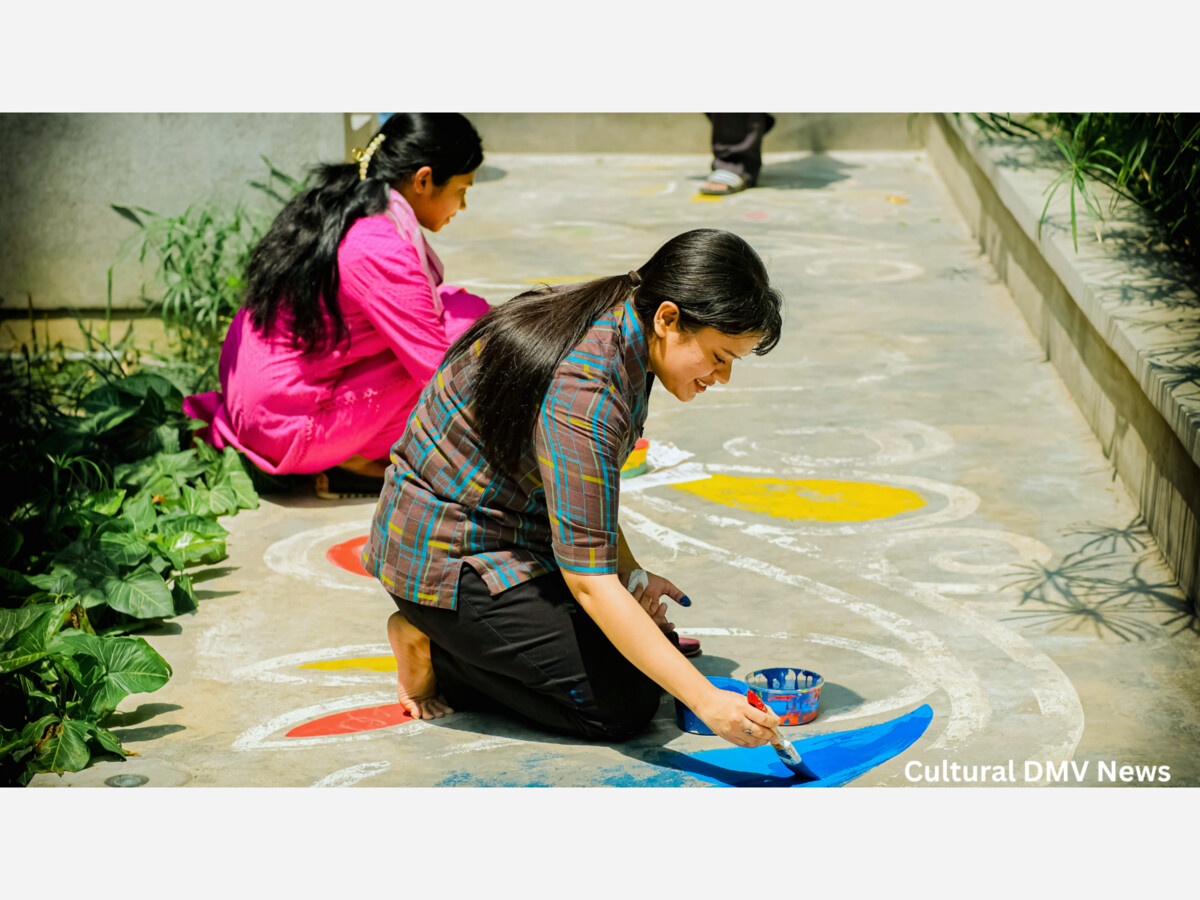



There is a bench outside the Takoma Park Community Center. Actually, there are six of them. Each one is hand-painted by a local artist. Each one carries a quiet message about protecting the environment. They were created by Art For The People, a nonprofit that brings art to homeless shelters, at-risk teens, and seniors.
"When you have a chance, stop by and take a look!" a city newsletter once said.
That bench is public art. It does not shout. It just sits there, quietly offering a place to rest, and maybe, without making a big deal of it, reminding you that someone thought this corner of the world was worth decorating.
Walk around Takoma Park and you will find poems stamped into sidewalks. A metal honeycomb full of natural materials, built as a home for native pollinators. Empty storefronts turned into pop-up galleries.
In neighboring Rockville, an active Arts and Culture Program places sculptures and murals around City Hall and the Senior Center. In Gaithersburg, the City's Art in Public Places Program funds permanent installations through the Capital Improvement Plan.
Montgomery County as a whole requires developers to incorporate public art in downtown and transit-area zones. Bethesda features a "Signal Box" project turning functional utility boxes into art. Silver Spring and Wheaton benefit from this dense, pedestrian-friendly artistic environment.
Arlington County maintains an extensive Public Art Program with art along walking and biking trails. Alexandria features artist-designed stormwater covers in Old Town North and functional sculptures in Del Ray. Fairfax County supports projects through ArtsFairfax.
In Washington, D.C., the Commission on the Arts and Humanities funds mural programs like Fresh Paint DC, while the District Department of Transportation adds art to bike racks and utility boxes through its Arts in the Right-of-Way program. Even WMATA integrates art into Metro stations across the region.
The DMV is, by any measure, a region that values public art. You cannot walk far without stumbling into evidence of someone's creative labor.
In 2015, artist Sergio Martinez built two long tables with angled benches and a waving wooden sunshade in Takoma Park. The Black Rhinos Project was functional art—the kind of thing people actually use. Not a monument you walk past. A thing you sit on.
A decade later, the wood was decaying. The paint was peeling. In many towns, that would be the end. The art would quietly disappear, replaced by a regular bench or nothing at all.
Not in Takoma Park. The city funded a full renovation. New boards. Fresh paint. Earth and sky colors. Good as new.
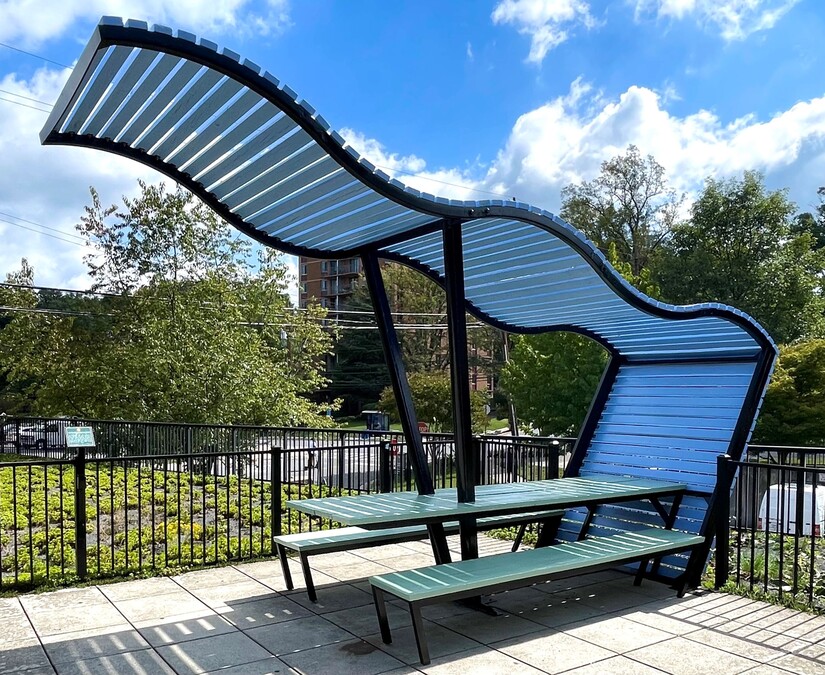 Image by City of Takoma Park Arts and Humanities - The Black Rhinos Project
Martinez was genuinely moved.
"It feels wonderful to see these works of functional art brought back to life," he said. "I'm deeply impressed and grateful for Takoma Park's dedication to art and its commitment to caring for and maintaining its cultural icons."
Brendan Smith, the city's Arts and Humanities Manager, put it simply:
"We're very proud... thankful that Sergio's renovation will preserve them for people to enjoy for many years."
Takoma Park is not alone in caring about preservation.
Montgomery County's Arts and Humanities Council recently launched an inventory of public art under Dr. Michele Cohen, who previously ran New York City's public art program. She testified before the County Council with a simple message:
"Deferring maintenance of public art year after year is not economical."
She added:
"Just as the County invests funds to maintain buildings, artworks require resources for maintenance as well as conservation."
Montgomery County is now considering a Public Arts Trust to fund exactly that kind of work.
In Gaithersburg, the city hired a consultant to evaluate every public art installation for damage and repair. Then they applied for—and received—a $30,000 Maryland State Arts Council grant to conserve a piece called "Roundabout," with the artist helping with the restoration.
That is the quiet work of preservation. It does not make headlines. But it keeps art alive.
Here is why all of this matters beyond policy and grants.
Public art makes people feel something. Not always the same thing. Not always what the artist intended. But something.
A 2025 study found that art in urban spaces fosters social cohesion, strengthens local identity, and enhances well-being. Another study described the images and symbols in our shared spaces as playing a profound role in shaping the identity, memory, and lived experience of urban communities.
You do not need a study to feel it, though. You already know.
Consider a mural that has been up for ten or fifteen years. Maybe the colors have faded. Maybe the edges have softened. Maybe someone has added a small tag in the corner that was not part of the original design.
When you walk past that mural, it sends a quiet message. Not a simple one. The mural hasn't completely lost its charm—or maybe it has developed a new kind of charm, the way old things sometimes do. The weathering gives it history. The small imperfections make it feel lived-in, like a favorite jacket.
But underneath that charm, there is another message, quieter still: it is most likely true that no one is paying close attention to this art anymore. Not with hostility. Not with malice. Just with the gentle neglect of people who have other things on their minds.
Compare that to a well-maintained bench with a poem under your feet and a hand-painted butterfly beside you, freshly sealed against the rain. That bench says: someone noticed this yesterday. Someone will notice it tomorrow. Not loudly. Just consistently.
The public benefit of this consistency depends on someone deciding, year after year, that the art is worth keeping.
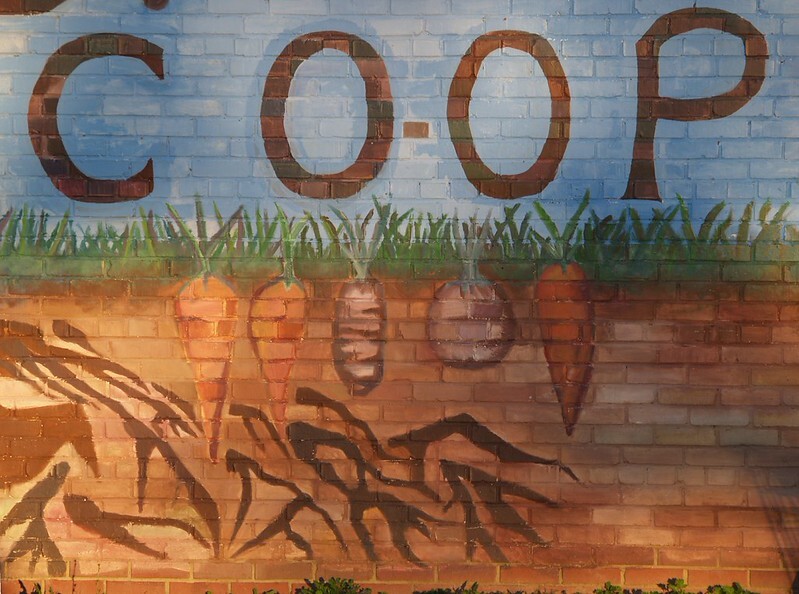 Detail Of Arlia Schwartz's Coop Mural (Takoma Park, MD) by takomabibelot
On Saturday, April 18, Takoma Park is asking for help. The Arts and Humanities division put out a call on April 7:
"We Need You to Help Create Public Art on Saturday, April 18"
Public art is a gift. And gifts, even the ones that have faded a little, even the ones that have developed a new kind of charm, are worth taking care of.
Other communities to visit that have exceptional artwork are:
Each of these neighborhoods proves that public art thrives not by accident, but by intention—and that intention is worth keeping.
#BeforeItsGone #PublicArt #DMVArts #PreservationMatters #KeepWhatYouHave


Overcast, with a high of 62 and low of 46 degrees. Don't forget your umbrella! Patchy rain nearby in the morning, overcast during the afternoon, clear during the evening, light drizzle overnight.