50° and Clear
Image
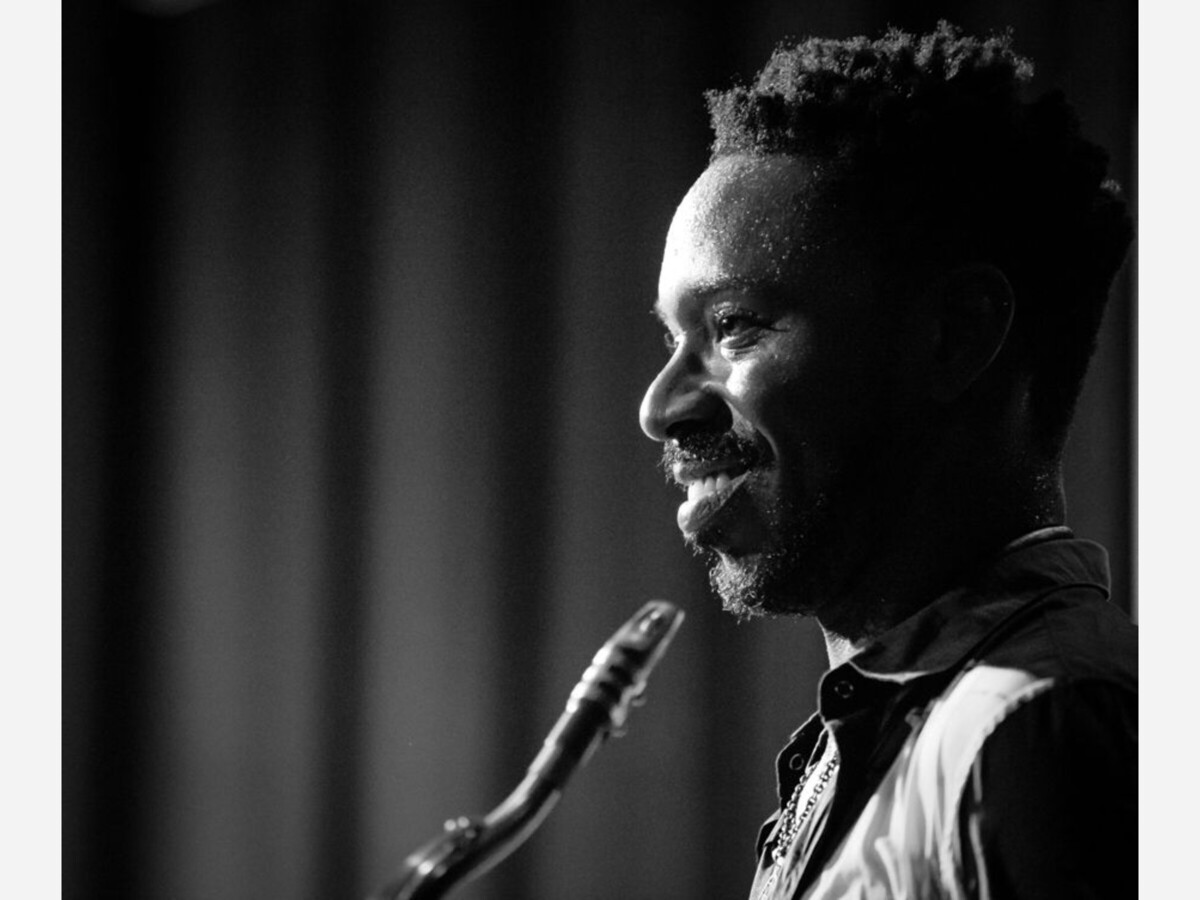
Image credit: Shabaka Hutchings performing with Sons of Kemet at Oslo Jazzfestival, 2018. Tore Sætre, CC BY-SA 4.0, via Wikimedia Commons.



For nearly two decades, Shabaka Hutchings' voice was a roar. As the leader of Sons of Kemet and a driving force in The Comet Is Coming, his tenor saxophone was an instrument of urgent, rhythmic power—a sound that defined the UK jazz explosion. But his latest album, Of The Earth, arrives on a different breath entirely. Having traded his sax for the alto flute, Shabaka joins André 3000 in a small but significant club of musicians who have swapped ferocity for something rarer: cool under fire. Listening to early tracks like the mesmerizing "Marwa the Mountain," I began to wonder: is this shift purely artistic? No. It is an act of rebellion. And the fact that André 3000 made the exact same move at nearly the exact same time is not a coincidence—it is confirmation.
At first glance, swapping a saxophone for a flute might seem like a retreat. Quieter. Softer. Less confrontational. But do not mistake volume for submission. In an industry that demands more—more touring, more output, more branding, more "content"—stepping back is the boldest move an artist can make. The rebellion is preventative self-care.
With the crazy schedules of the busy musician and so many mouths to feed—labels, managers, booking agents, publicists, session players, and everyone else with a hand out—Shabaka, like André 3000, has reprioritized his talents. He has looked at the machine and said, "No, thank you." That is not survival. Survival is scraping by. This is a conscious, deliberate choice to place his own wellbeing above the machinery that once profited from his exhaustion.
The collaboration between these two flutists makes this explicit. Shabaka contributed to André 3000's surprise 2023 flute album New Blue Sun . André returned the favor, playing drone flute on "I'll Do Whatever You Want" from Shabaka's 2024 album Perceive Its Beauty, Acknowledge Its Grace . They later reunited on "To the Moon" from Shabaka's 2025 EP Possession, a nearly eight-minute track where Spectrum Culture described "the two flautists circling, complementing and pushing each other in a manner neither competitive nor entirely meditative" .
This is not two isolated artists having the same idea. This is a mutual reinforcement. A silent pact. When one of the most famous rappers alive—a man who could sell out arenas tomorrow if he chose—decides to play bamboo flute for an entire album, he validates everyone else who makes that leap. And when a respected jazz innovator follows the same path, the validation flows both ways.
I have only had the chance to attentively listen to three songs from Of The Earth so far. Even so, one thing is clear: this is not a simple continuation. My immediate favorite, "Marwa the Mountain," is a revelation. Where his saxophone playing once demanded attention through dense, circular patterns, the flute here invites you in. The melody breathes. It ascends slowly, built from looping rhythmic structures that feel less like a groove and more like a steady, meditative pulse. It is stunning to hear Shabaka not conquer space, but reclaim his own time.
The We Out Here festival website notes that Of The Earth—written, performed, produced, and mixed entirely by Shabaka—was "created largely while traveling, the music is built from portable instruments and production tools." That independence is the point. No studio clock. No label executive peeking through the glass. Just a man, a flute, and the freedom to create on his own terms.
Further evidence of my theory are the song titles on this album. Dance in Praise. Light The Way. Those of the Sky. Ol'Time African Gods. I could go on, but you get the point. These are not the song titles of a man chasing streams or playlists. They are affirmations. Declarations of independence set to rhythm. He is not trying to impress anyone. He is centering himself.
Consider the contrast. Sons of Kemet gave us Your Queen Is a Reptile—a fierce, political statement aimed outward at systems of power. Of The Earth aims inward. The rebellion has shifted from public protest to private preservation. That is not surrender. That is strategy.
And consider André 3000's track titles on New Blue Sun: "I Swear, I Really Wanted to Make a 'Rap' Album but This Is Literally the Way the Wind Blew Me This Time." The humor is deliberate. He knows what people expected. He is laughing at it. Both men are using their platform to say: we decide what our art looks like, not you.
And yet, Shabaka has not abandoned his past entirely. While listening to the album, you can still hear him playing the saxophone—or at least it sounds like he is—but he seems to have a whole different approach to the flute. He is not simply replacing one horn with another. He is building a new ecosystem of sound.
Seemingly overdubbing himself and layering his songs with the flute, he deploys the saxophone in short bursts intermittently throughout the tracks. It is no longer the lead voice shouting to satisfy a crowd or a contract. It becomes a texture. A memory. A quiet acknowledgment of where he has been, without being trapped there.
The rhythms supporting these layers are just as revealing. There are bata drum-style rhythms amongst other simple, unhurried beats. I hear bell-sounding instruments, clear and punctuating, alongside what sounds like a modern marimba with its warm, wooden resonance. And then, floating above it all: several flutes layered ever so softly, each one breathing at a slightly different angle. The result is immersive, almost choral—a one-man orchestra built not for the stage, but for sanity.
Shabaka himself has spoken about burnout. According to a recent interview, he explained that treating "a spiritual practice as a commodity that can be repeatedly sold" led him "straight into burnout" . He now seeks "energy without tension"—a phrase that perfectly captures the shift from chaos to peace.
He is putting more of his actual self into the music, while simultaneously lowering the stakes for everyone else. That is the radical act at the heart of Of The Earth. By stepping back from the hurricane of the saxophone—and the hurricane of industry demands—he has found a way to be more present for himself.
And he has company. The image of Shabaka and André 3000 playing flutes together is not a joke or a meme. It is a photograph of two men who said "no" to the machine and picked up something quieter. That is not two isolated breakdowns. That is a movement.
A note of gratitude to Olivia Bradley-Skill at Co-Sign Marketing & Licensing. She has been sending me music from her roster for years, and this is the first time I've felt compelled to write. 'Of The Earth' earned it. Thank you, Olivia.
#Shabaka #OfTheEarth #ExperimentalJazz #PreventativeSelfCare #FluteRebellion #Andre3000

Overcast, with a high of 62 and low of 46 degrees. Patchy rain nearby in the morning, overcast for the afternoon, clear in the evening, light drizzle overnight.