53° and Clear
Image

Album artwork courtesy of Franck Biyong.



Published October 23, 2026 · 4 min read
Listen to Franck Biyong Discuss the new Album, Nambala with Georges Collinet and Dj Eme on Mixcloud.
The first thing you notice about NAMBALA is the bottom end. Not a wall of sound—a floor. Something to stand on while everything above it moves.
I was drawn to "Voices of Emancipation." It plays like a love song—a gentle rumba, warm and unhurried, the kind of thing that could soundtrack a wedding without anyone asking who made it. Listen to the words and it's about Cameroonian politics: the frustrations and the hopes of a people, folded into a melody that never raises its voice. That's the record in miniature. As Georges Collinet put it during the broadcast: beauty on the surface, cause underneath.
Biyong has made twenty-one albums. He is one of the most important African musicians in the diaspora, and if you live in the United States, there's a very good chance his name is new to you. NAMBALA is the one that should change that.
It's darker than Radio Masoda, the 2024 Afro-rumba revival he made with Orchestre Lipombe Jazz. More restless. More willing to sit inside a groove until it turns into something else. Recorded across Cameroon, Kenya, France, and North Africa—and you can hear the seams if you listen for them. Not as flaws. As evidence of a record assembled along a route rather than in a single room.
It opens with "Twilight of World Music" and closes with "Sunset on Pan-Africanism." A record that announces its scope before it plays a note and knows exactly how to end.
"Don't Tell Me Nonsense" carries the weight of history. Tony Allen—who co-founded Afrobeat with Fela, and who died in 2020—is on it. So is Tunji Allen, Tony's grandson, on vocals. Three generations, one track.
And it wasn't a business arrangement. In 2002, Biyong dedicated a song to Tony Allen after opening for him in Dijon. Twenty-four years later, Tony's grandson is singing on his record. That's not a feature. That's a lineage.
"Dilam" is the one that stays with you—a swaying Afrobeat-highlife instrumental built on talking drums played to imitate speech. No lyrics, no shortage of things to say. "Seto" pairs a sunlit groove with a spoken passage about Guinean independence. "Fais Moi Danser" puts Tunisian singer Nebil Mannai's French and Arabic vocals over a Kinshasa guitar line and a five-piece horn section that keeps splintering into solos. "Lovi Fever" hands a searing, love-troubled lyric to Ghanaian singer Kyekyeku over a Nigerian Afrobeat rhythm, with soprano sax weaving through it.
It's a record that refuses to sit in one place. It earns the restlessness.
I sat down with Franck to talk about the record. Georges Collinet came on afterward to offer commentary on that conversation and to help frame the sections of this story.
Georges hosted the most-listened-to radio program in Africa for three decades. He introduced James Brown to the continent. His role here was different from mine: I asked Franck about the making of the album, and Georges placed it in a longer arc—what this music comes from, what it inherits, what it's still arguing with.
What resulted was less a promotional interview than a conversation between two people who have spent their lives inside the same tradition, with Georges standing back far enough to see the shape of it.
The full conversation aired on Afrobeat Orbit, with the original broadcast credited to WOWD 94.3 FM / TakomaRadio.org. Listen now on Mixcloud.
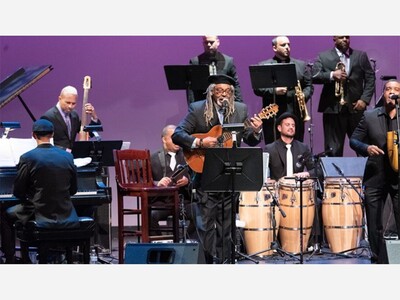
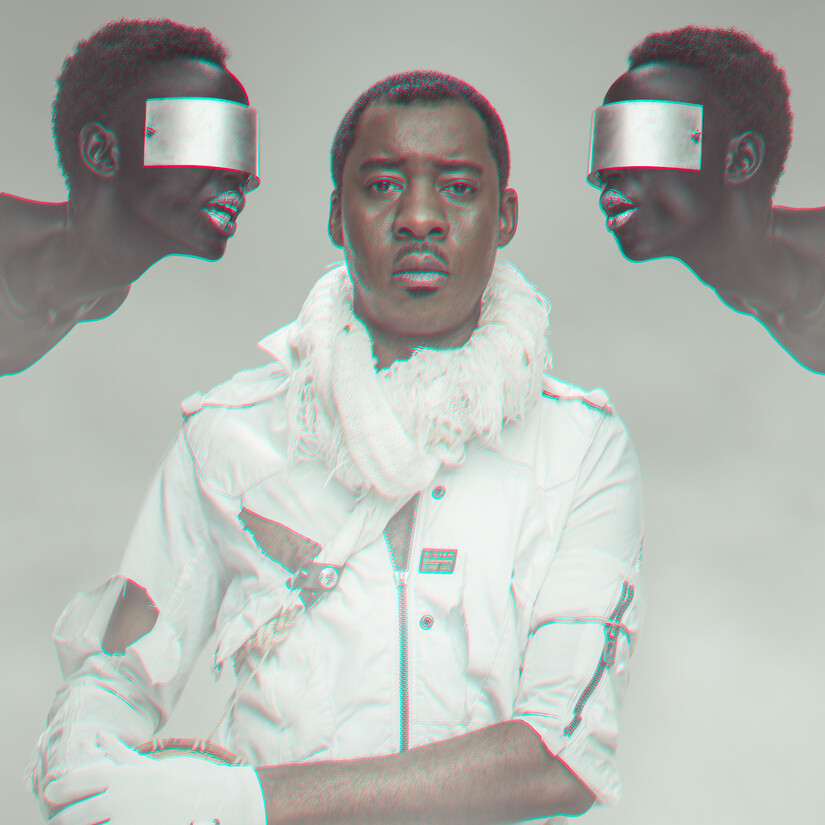 Photo courtesy of Franck Biyong.
The method is the story.
Franck recorded percussion in Cameroon first—drummers at home, laying a foundation before anything else existed. Only then did he take that material to Kenya and connect with players in Nairobi. He wasn't arriving cold. He had spent years as musical director with Coke Studios in Kenya, working inside that scene, and the Nairobi session was built on relationships that predated the album by a decade.
The musicians he brought in are the record's thesis.
Asaph Uzele plays bass. Congolese, born and raised in Kenya. One musician who is himself the diaspora conversation—Central African roots, East African formation, playing on a record built from Cameroonian percussion and finished in Paris.
Eschol Ake plays guitar. Based in Paris, and Franck describes him as one of the most versatile musicians he's ever played with—the go-to man for melodies and flavors, the person you call when a track needs to find its shape.
The Nairobi Horns Project is on the record too, and Biyong's connection to that group goes back to his Coke Studios years. The horn arrangements carry the Nairobi sound—bright, tight, conversational—into the same room as the Cameroonian percussion.
Then the record finished in France. Home, then East Africa, then Europe. The album was assembled along a route, and it sounds like it.
Biyong coined the word Afrolectric to describe what he does. It isn't a genre in the marketing sense. It's a proposition: that the connections between African regions should be treated as an actual musical style rather than a playlist category.
NAMBALA is that proposition in practice. Cameroonian drummers, Kenyan horns, a Congolese bassist raised in Kenya, a Paris-based guitarist, a Tunisian singer, a Ghanaian vocalist, a Nigerian rhythm—all in the same conversation, none of them asked to sand off what makes them distinct.
That's harder than it sounds. Most pan-African projects are curated. This one was built.
NAMBALA is out now. The full conversation with Franck Biyong and Georges Collinet is on Mixcloud, with credit to WOWD 94.3 FM / TakomaRadio.org for the original broadcast.
Monday, a second piece looks at the musicians behind the credits—the nineteen contributors whose names don't fit on a cover, and why liner notes matter more than ever.
#FranckBiyong #NAMBALA #GeorgesCollinet #Afrolectric #AfrobeatOrbit #WOWD #TakomaRadio #CulturalDMV


Sunny, with a high of 63 and low of 45 degrees. Sunny during the morning, clear in the afternoon and evening,